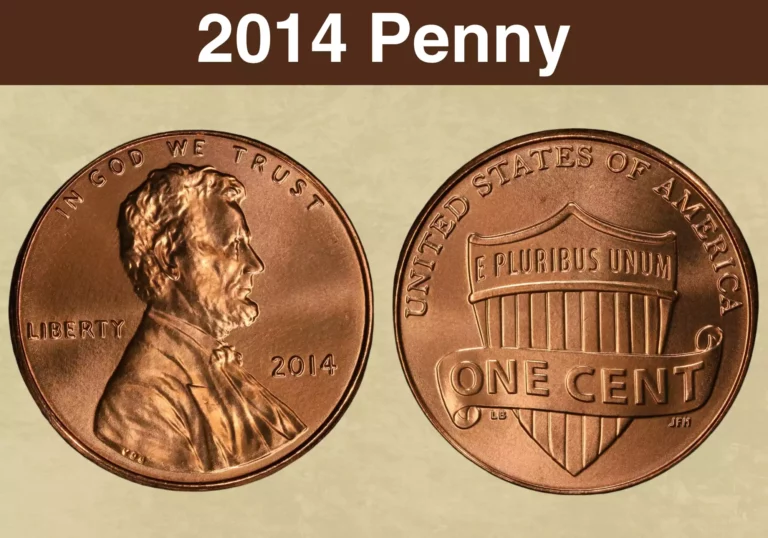
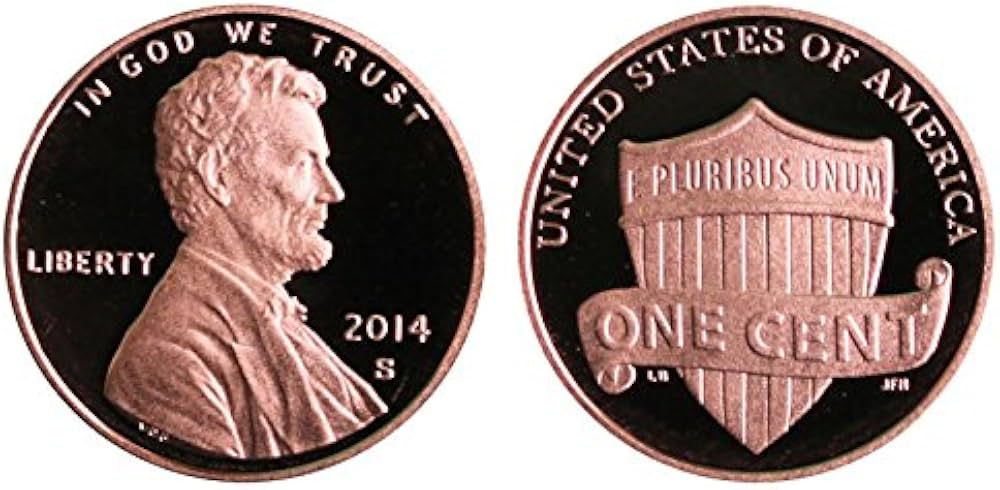
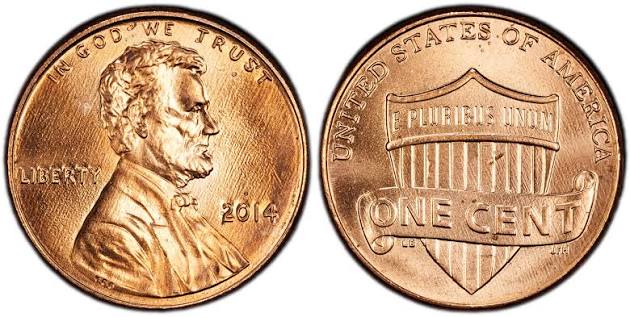
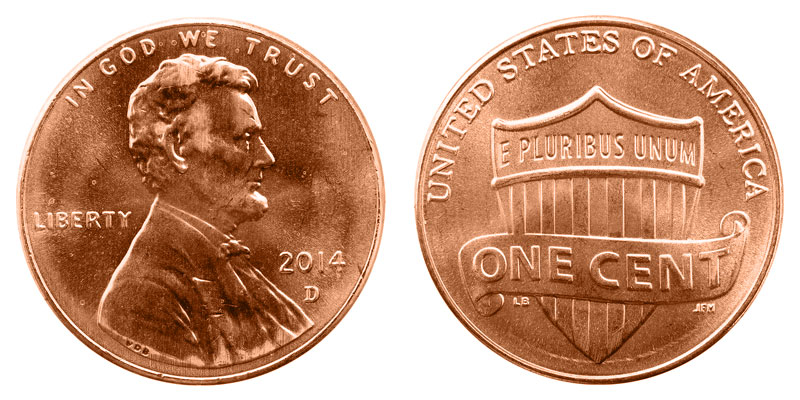
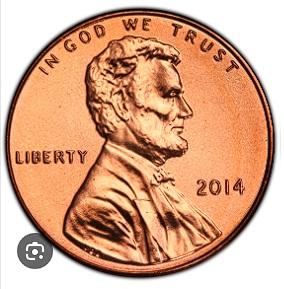
 Most Famous
2014-P DDO FS-101 Doubled Die Obverse
$20 – $400+
The FS-101 (First Significant variety #101 in the CONECA registry) is the only widely cataloged major die variety for the 2014 Lincoln cent. It originated at the Philadelphia Mint when the working die received a misaligned hub impression during the hubbing process, causing a second, offset transfer of the design elements onto the die face.
To identify it, examine LIBERTY, the date numerals, and IN GOD WE TRUST under a 10× loupe. Genuine hub doubling shows two clearly separated, distinct images of the inscription — the kind of crisp separation that reads as two overlapping but offset letters. Mechanical doubling (machine doubling or MD), which has no collector value, appears as a flat, shelf-like smear rather than a true second impression.
Collectors prize the FS-101 because it provides a genuine treasure-hunt incentive in an otherwise common modern series. The fact that it exists only on Philadelphia coins (Denver coins show no significant die varieties) concentrates demand on a specific and verifiable subset. Error premiums are strongly grade-sensitive: worn examples carry modest premiums, while mid-to-high uncirculated examples in RD designation command serious prices.
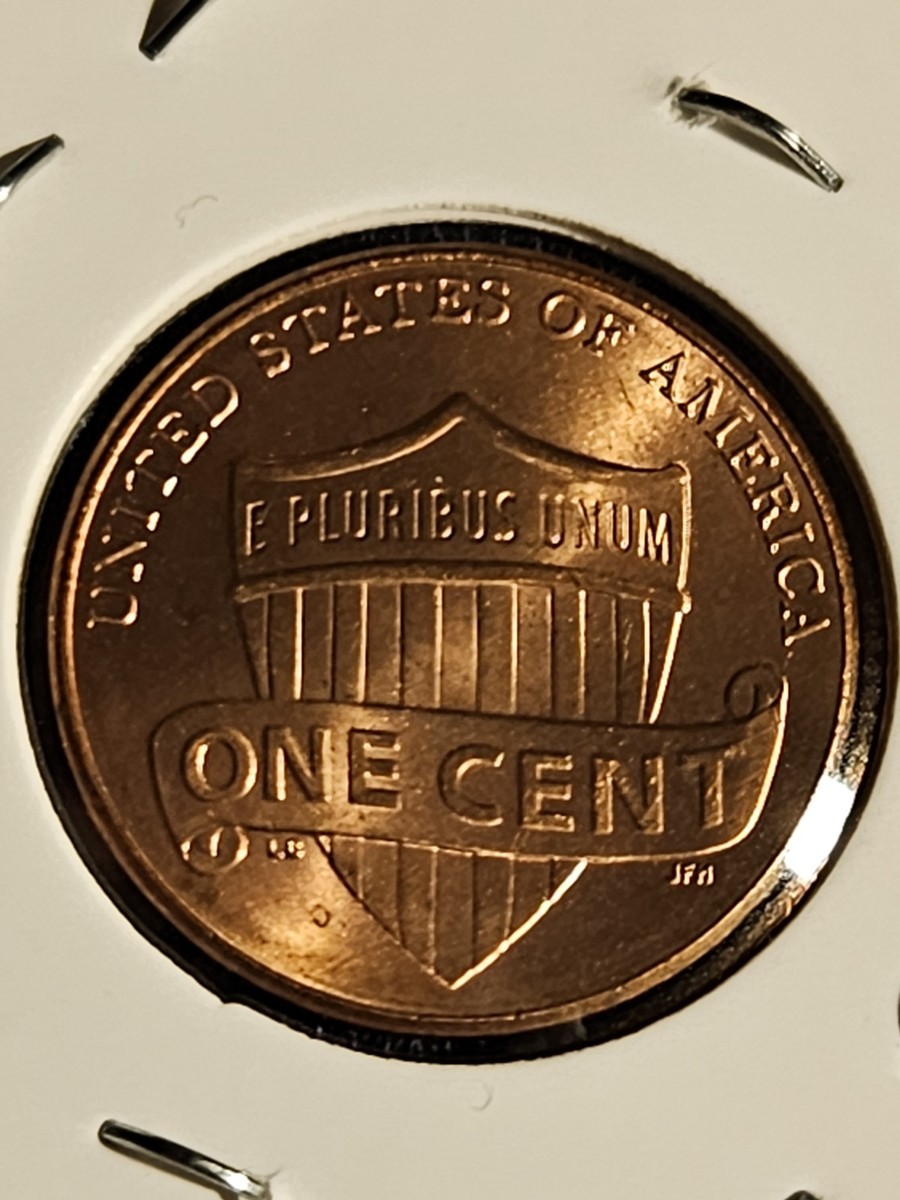 Most Valuable Error
2014 Penny Off-Center Strike
$10 – $300+
An off-center strike occurs when the blank planchet is not properly centered between the obverse and reverse dies at the moment of striking. The result is a coin whose design is visibly shifted from the center, leaving a blank, unadorned crescent of the planchet on one or more sides. The 2014 Lincoln cent's copper-plated zinc planchet makes these errors particularly visible due to the bright copper surface contrast against the design.
The degree of off-centering, expressed as a percentage, directly drives value. A minor 5–10% shift adds only a few dollars. When the shift reaches 20–30%, the blank area becomes dramatically visible while the complete date remains readable — this combination is the sweet spot collectors seek. Errors where the date is partly or fully obliterated lose significant value because they cannot be attributed to a specific year or mint.
Dramatic off-center strikes of 40–60% with a full readable date are genuinely scarce and generate competitive bidding at auction. The visual drama of the misaligned design against the wide blank crescent gives these coins exceptional eye appeal — a key factor in modern error coin valuation. Condition matters even here: an MS63 off-center commands considerably more than a circulated one of equivalent shift percentage.
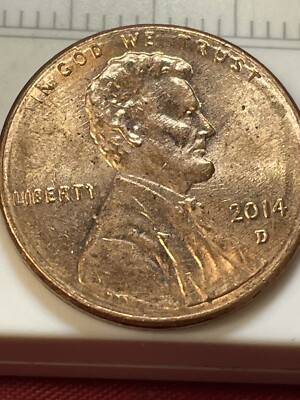 Rarest
2014 Penny Rotated Die Error
$50 – $300+
Rotated die errors — also called medal alignment errors — occur when one die is improperly secured in the press, causing the obverse and reverse designs to be rotationally misaligned. Under normal U.S. coin alignment (coin turn), flipping the coin vertically from heads to tails shows the reverse right-side-up. A rotated die error produces a reverse that appears at a measurable angle — 30°, 90°, or even 180° — when the coin is turned in the standard way.
To test for rotation, lay the coin obverse-up on a flat surface, note Lincoln's orientation, then flip the coin vertically (as you would turn a page). The Union Shield reverse should appear right-side-up. Any deviation from upright is a rotated die error. Rotation is measured in degrees clockwise from correct alignment. Dies that produce moderately rotated coins are sometimes used for full press runs before quality control catches the issue, meaning small populations of rotated 2014 cents do exist in the market.
Value scales steeply with the degree of rotation. Minor rotations of 10–30 degrees add modest premiums of $5–$15. A 90-degree rotation — visually striking and immediately obvious — can bring $100–$200. The most extreme and rare 180-degree "upside-down reverse" examples are the most sought-after and have sold for $300 or more when combined with high uncirculated grades. Certification by PCGS or NGC substantially increases buyer confidence and realized prices for this error type.
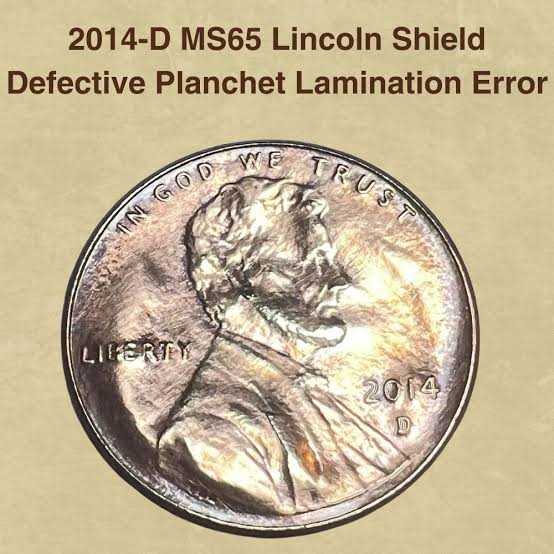 Best Kept Secret
2014 Penny Lamination Error
$10 – $50+
Lamination errors are among the most common mint errors on copper-plated zinc Lincoln cents, and the 2014 issue is no exception. These errors result from the metallurgical instability of the copper-plated zinc planchet composition — specifically, inadequate bonding between the thin copper plating (approximately 8 microns thick) and the zinc core. When the bond fails, the copper layer blisters, flakes, or peels away from the zinc substrate, either before or during the striking process.
Pre-strike laminations produce bubbled or partially detached surface areas that were then struck by the dies, creating raised or depressed zones where the design is partially disrupted. Post-strike laminations (die separation after striking) tend to produce cleaner peel lines and detached flakes. Visible size of the affected area is the primary value driver: a tiny peel adding less than 5% surface disruption adds only a few dollars, while large areas of peeling covering 20–40% of the coin's surface generate genuine collector interest.
The "best kept secret" label applies because casual searchers often dismiss lamination errors as damage — making them underpriced relative to their true scarcity. A dramatic, large-area lamination on a high-grade uncirculated 2014 cent can fetch $20–$50 raw and considerably more when professionally certified. The 2014 issue sees laminations relatively often due to the high-speed production runs at both Philadelphia and Denver.
 Condition Find
2014 Penny Die Cud & Broadstrike Errors
$15 – $75+
Die cuds form when a piece of the hardened steel die breaks away at or near the rim, leaving a void in the die face. Subsequent coins struck from the damaged die show a raised, featureless blob of metal at the coin's edge — the exact shape of the broken die fragment. The raised mass (the "cud") flows into the cavity left by the missing die piece. Retained cuds, where the broken die fragment stays partially in place, can create even more dramatic striking patterns with overlapping or distorted design elements nearby.
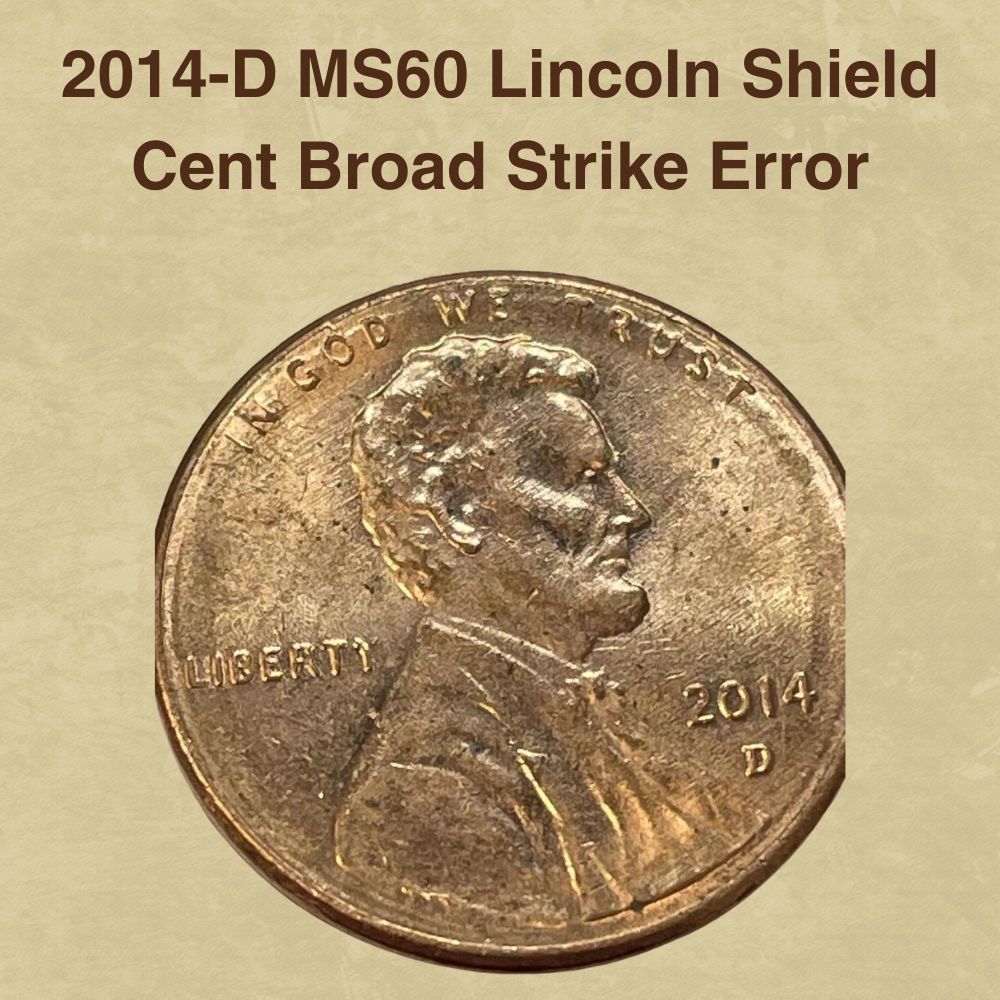
Broadstrikes occur when the retaining collar — the ring that holds the planchet in precise position during striking and forms the coin's edge — fails to engage properly. Without collar containment, the metal spreads outward under die pressure, producing a coin that is larger in diameter than normal, with a rounded, rounded rim and a slightly thinned, spread design. The 2014 Lincoln cent, struck in enormous quantities at high speed, produces broadstrikes often enough that raw examples are findable with patient roll searching.
Minor die cracks (hairline fractures in the die that appear as raised lines on the coin's surface) are common on modern high-production cents and add only modest value of $2–$10. Major cuds are genuinely scarce and consistently attract collector interest. A broadstrike on a visually dramatic example — particularly where the design spreads evenly and the coin retains full detail — can bring $25–$75 raw and more when certified. Combined cuds-on-broadstrike errors are the most valuable sub-type in this category.